
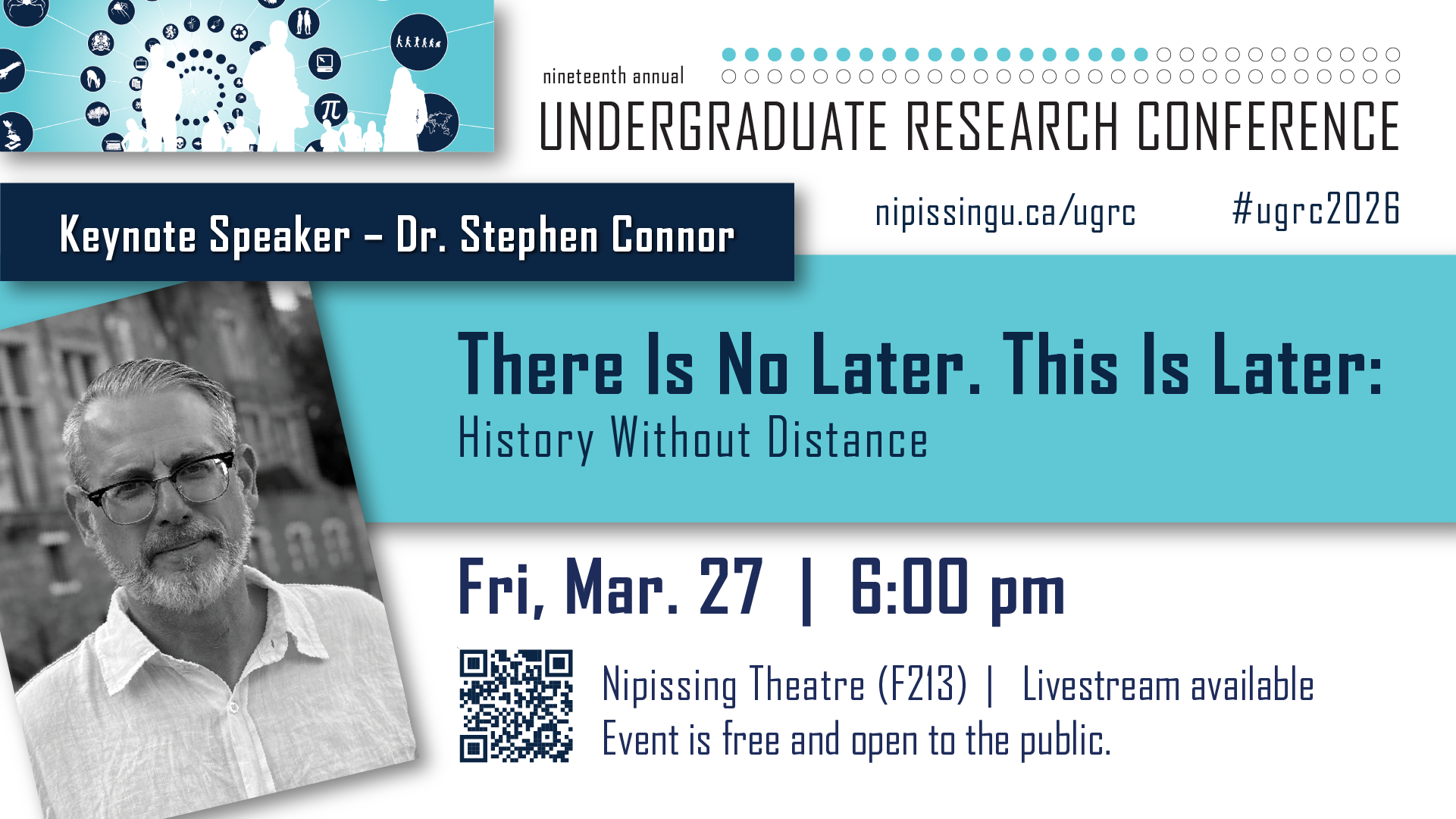
There Is No Later. This Is Later considers how encounters with war, displacement, and their human consequences have reshaped my practice of military history and my approach to teaching. This keynote is not an argument that history offers reassurance, warning, or moral immunity, but a claim about method and ethics in a moment when distance between past and present has collapsed.
I begin from a simple claim: history is not patient, and it is not a warning system. There is no safe vantage point from which violence becomes instructive rather than urgent. War collapses distance between observer and participant, knowledge and action, past harm and present consequence. This loss of distance unsettles familiar assumptions about agency, choice, and judgment, and exposes how readily we mistake knowledge for agency.
Drawing on my formation as a military historian, my research on occupation and violence, and my work with displaced persons, I trace a shift from the historian as observer to a more exposed, risk-bearing practice of teaching about the past while also speaking about the present. History cannot rescue us from repetition. There are no control groups, no clean counterfactuals, and no judgments free from moral risk.
The talk argues for a restrained ethics of care and responsibility: not redemption or progress narratives, but narrow warrants tied to specific people, moments, and obligations. History still matters, especially amid disinformation and weaponized narratives. It matters because truth persists without guarantees, and because there is no later in which responsibility can be deferred.
EVENT DETAILS
Friday, March 27, 6:00 p.m., F213 (Nipissing Theatre), Nipissing University, 100 College Drive
About the speaker
Stephen Connor is an Associate Professor of History at Nipissing and co-founder and Associate Director of the Centre for the Study of War, Atrocity, and Genocide. Dr. Connor’s research focuses on popular culture, collective memory, and the ways conflict is represented and understood by public audiences. His work sits at the intersection of military and cultural history, with particular attention to how pop culture shapes historical knowledge, ethical interpretation, and public memory. His most recent publication is Battle Lines Drawn: War Comics Since 1914 (2025), which examines the global history of war comics as tools of propaganda, memory, and critique. Dr. Connor’s teaching is grounded in innovative pedagogy and a commitment to experiential learning. He integrates site-based learning, historical simulation, and close engagement with evidence to help students grapple with complex and contested histories. Through his work at the Centre, he leads community-engaged projects that connect academic research to public audiences, with an emphasis on ethical responsibility, critical inquiry, and the study of historical and contemporary state violence.